What makes a fantastic company?
Our review of companies, financial literature and studies reveal the following characteristics:
- Founder alignment
- Super loyal and sticky customers
- Big industry tailwinds
- Compelling unit economics
Rarely do companies have all of the criteria; TechnologyOne (ASX: TNE) is one of the exceptions. This is why it deserves to be on your watchlist.
***
Rewind to 1987. Australia made its first mobile phone call. Desktops were all the rage, although the internet had yet to arrive. Global behemoths SAP and Oracle dominated the commercial software scene. And in a small demountable office in industrial Brisbane, Adrian Di Marco founded what would become Australia’s largest enterprise software company.
Unable to get a bank loan, Di Marco approached a former customer, the Mactaggart family, who today remains TechnologyOne’s largest shareholder. Armed with a Prime 9755 computer, he set out to shift the software landscape. The 29-year-old wanted to build software with a single source code that could be sold as a product to several customers. At the time, this approach was unique given most software was customised for each client.
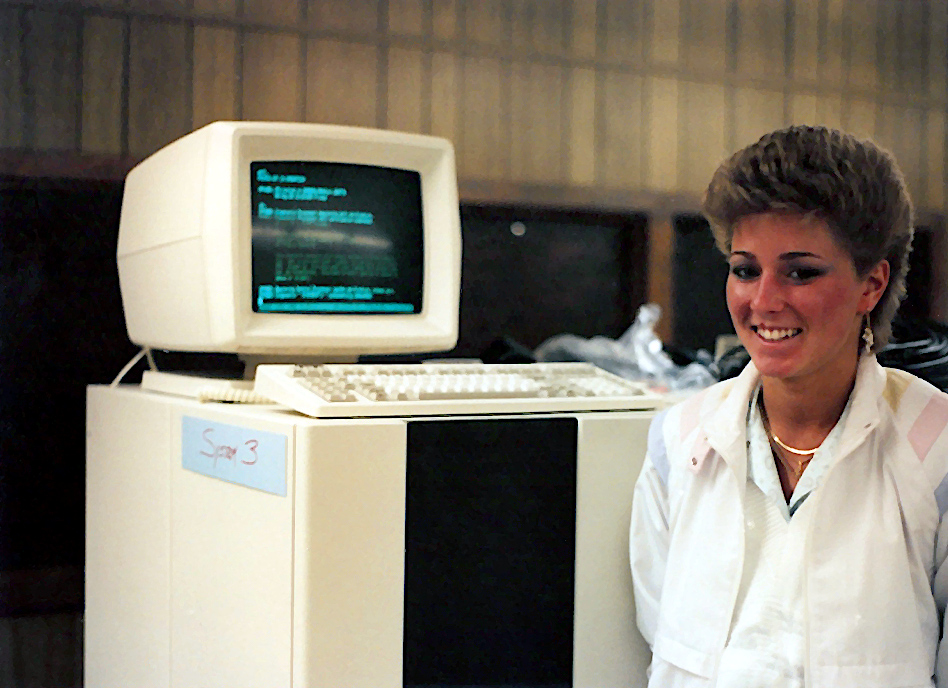
Di Marco initially started with financial software. It was a large market (every company has finances) and not particularly well served. During the ’90s, TechnologyOne became the top-rated supplier amongst CFOs. A preconfigured solution reduced the time, risk and cost of implementing enterprise software. New code didn’t need to be written for each new client, with profits growing faster than revenue. Since becoming public in 1999, revenue has increased 13 times and profits have soared 15-fold.
The unit economics are also incredibly attractive. TechnologyOne earns a gross margin (sales minus direct costs) of 87 per cent, which surpasses the likes of Microsoft. Its profit before tax (PBT) margin, which takes into account overheads and development costs, is 30 per cent, well above that of direct competitor SAP. Management expects this should increase to 35 per cent as the business spreads fixed costs over a growing customer base.
Power of One
Even more distinct was TechnologyOne’s approach to the customer. Most software companies such as Microsoft, SAP and Oracle use varying degrees of third-party vendors to service clients. This allowed them to focus on what they do best – technology, but can often leave customers unsatisfied.
There is also a misalignment between distributor and company incentives – distributors are paid for writing new service agreements, whereas TechnologyOne cares for all its customers, new and existing. Di Marco pivoted to an internal sales team, dubbed the ‘Power of One’. TechnologyOne takes responsibility for every aspect of the customer relationship, from sales, installation, configuration and after-sales service. By providing an improved customer journey, TechnologyOne was able to take market share from incumbents who were better resourced and funded.
As an added benefit, being closer to the customer enabled sales to relay feedback to developers for improvements or new capabilities. As a percentage of revenue, R&D represents above 20 per cent. It’s spent more than $500 million over the last decade with the department housing 400 developers – one of the biggest development operations in Australia. Staying at the forefront of technological change has been critical to TechnologyOne’s continued success.
Expensive for a Reason
Rather than service all industries, TechnologyOne focuses on dominating specific niches. Its bread and butter is local government and higher education sectors. More recently, it has moved into financial services, healthcare and asset-intensive sectors, typically via its original core finance product before building sector-specific functionality and configurations. Its main operations remain in Australia and Asia. Management has earmarked the United Kingdom − via the recent acquisition of Scientia, as the next growth engine.
TechnologyOne expects to earn a profit of $100 million in 2023. That places the business on a price-to-earnings ratio of 50, a hefty premium compared to other companies. However, it’s for a reason. The business has always had a focus on long-term growth, doubling in size every five years. Additionally, its sticky customer base, illustrated by the 99 per cent retention rate, means investors are willing to pay more for its future earnings today.
Should TechnologyOne continue in line with historical growth, it’s not unreasonable to suggest a profit of $200 million by 2028 and the earnings multiple halving to 25. It would still represent a tiny slice of the global enterprise software pie, estimated at $305 billion by Gartner and expected to grow at 11.3 per cent over the next five years.
Di Marco’s philosophy is that if management delivers against a clear strategy, the share price will look after itself.
“The movements in the stock market from week to week, or from month to month, are very erratic. Most of the movements are for reasons totally unrelated to how well the company is doing. What you need is solid long-term growth, and over time the price of the shares will reflect that.”
Next Chapter
Last year Di Marco completed his transition away from the business, stepping down as executive chairman. Per the last annual report, he retains over 5 per cent of the company. Typically a founder leaving a business would an amber flag. However, TechnologyOne is left in the competent hands of Edward Chung, who also owns a significant shareholding worth $13.6 million. Furthermore, the remuneration structure ties Chung’s long-term incentives earnings growth and shareholder returns.
“It started 10 years ago. I’d brought Ed on as CFO [in 2007] and he was just a very smart person who got the company and the culture. Then I put him in R&D, then in consulting and then made him COO … it was all in preparation for this.”
TechnologyOne has managed to carve a profitable niche within the enterprise software landscape, typically dominated by large multinationals. Naturally, as the company scales, growth will be more difficult to come by. Additionally, moving into new geographies and sectors will provide their unique challenges. However, given its laser focus on innovation and customers, we’re confident TechnologyOne has many further years of growth ahead.